

Portable washing machines: do they really save water and electricity?
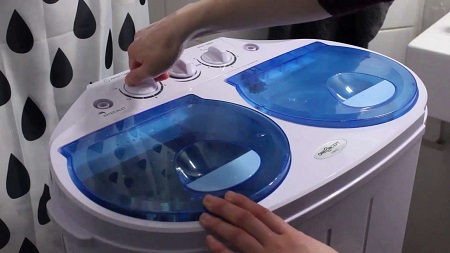
Portable washing machines have gained popularity due to their compact size and ease of use, but many people wonder if they are truly an efficient option in terms of water and electricity consumption. Do they save more than a conventional washing machine? Here is everything you need to know.
Electricity consumption of portable washing machines
One of the main attractions of portable washing machines is their potential to use less electricity per wash cycle compared to traditional washing machines. However, this depends on several factors:
How much electricity do they use?
- Portable washing machines: They use between 0.1 and 0.5 kWh per cycle.
- Traditional washing machines: They use between 0.5 and 1.5 kWh per cycle.
Although they use less electricity per wash, it is important to remember that portable washing machines have a smaller load capacity. This means that if you need to wash a lot of clothes, you will have to run more cycles, which may result in you spending as much as you would with a traditional washing machine.
Factors affecting electricity consumption
- Model efficiency: Washing machines with an A+++ rating are the most efficient, optimizing the use of electricity and water.
- Use of hot water: Washing with cold water helps reduce electricity consumption.
- Cycle duration: Avoiding excessively long wash times reduces energy consumption.
Tips to reduce electricity consumption:
- Choose an A+++ model for greater efficiency.
- Wash with cold water to avoid additional energy consumption.
- Unplug it when you are not using it to avoid standby power consumption.
- Use shorter cycles if the clothes are not very dirty.
Water consumption of portable washing machines
Another key point when evaluating a portable washing machine is the amount of water it uses compared to a conventional washing machine.
How much water do they use?
- Portable washing machines: They use between 10 and 15 gallons of water per load.
- Traditional washing machines: They use between 19 and 26 gallons per load.
This means that, under normal conditions, a portable washing machine uses less water than a conventional one, although its load capacity is smaller.
Factors affecting water consumption
- Drum capacity: The smaller the capacity, the lower the water consumption.
- Model and efficiency: High-efficiency (HE) models adjust the amount of water according to the load.
- Cycle type: Eco and short cycles reduce water consumption.
Tips to reduce water consumption:
- Use full loads to make the most of each cycle.
- Choose high-efficiency washing machines with water sensors.
- Use short or eco cycles to reduce unnecessary consumption.

Is a portable washing machine worth it?
If you are looking for a more efficient option in terms of water and electricity consumption, a portable washing machine can be a good choice, as long as it is used correctly. They are ideal for small spaces, use fewer resources per load, and, in efficient models, can represent significant savings.
Summary of advantages:
- Lower water and electricity consumption per cycle.
- Compact and easy to use in small spaces.
- Ideal for people who do not need to wash large quantities of clothes.
- Efficient models (A+++) optimize the use of energy and water.
However, if you need to wash large volumes of clothes, you may end up running more cycles, which would reduce the expected savings.

Conclusion
Portable washing machines can be an efficient and eco-friendly alternative, especially if you choose energy- and water-efficient models. The real savings will depend on how you use them and the type of washing machine you choose.
If you are looking for a compact, efficient option that helps reduce resource consumption, a portable washing machine can be a great investment.